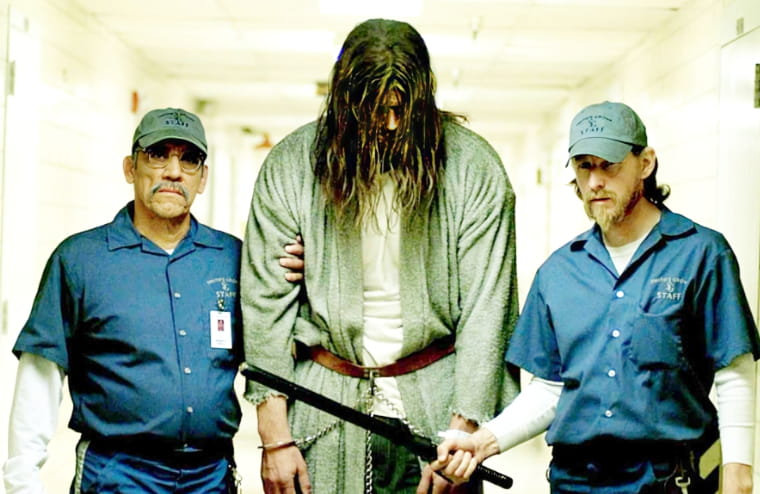


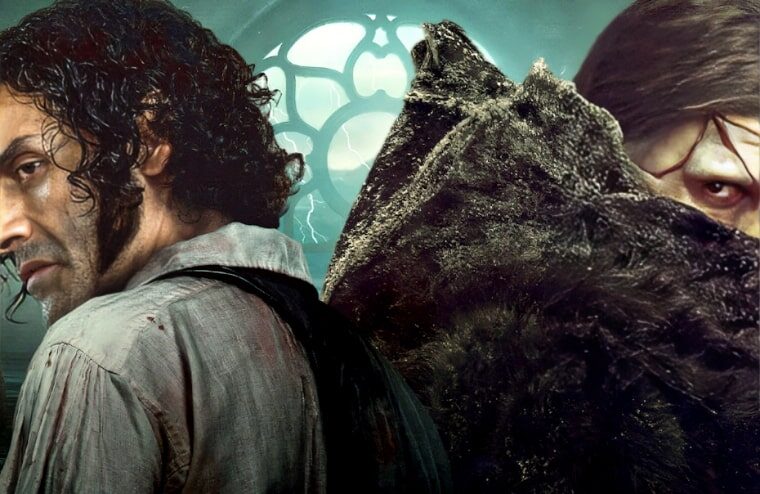
“Frankenstein” (2025) is not a literal, word-for-word adaptation of the 1818 Mary Shelley novel. Scenarios and themes parallel the book, but this isn’t Mary Shelley’s “Frankenstein.” It’s Guillermo del Toro’s. Anyone familiar with his filmography will pick up on that within the first 10 minutes. His aesthetic, sensibility, and affinity for monsters are the driving force behind this adaptation. If you want to experience “Frankenstein” as Mary Shelley envisioned it, I strongly recommend that you read the book. As for his approach to the process of adapting a story such as “Frankenstein,” Del Toro himself said it best: “What I find beautiful is that when you create a universal myth, whether it’s Frankenstein, Pinocchio, Dracula, or Sherlock Holmes, the myth itself rises so far above the original material that any interpretation is equally faithful if done with sincerity, power, and personality. If you think in terms of fidelity to the canon, you would be completely paralyzed.”
“Frankenstein” is one of those stories that can and should be told in a number of different ways. Del Toro uses the myth to convey his own ideas about the nature of monsters in all their forms. Shelley was primarily concerned with unchecked hubris. While this thesis is presented and argued by Mia Goth’s Elizabeth, this adaptation leans into the idea of how we create our own monsters by being monstrous ourselves. Shelley’s Victor Frankenstein was blessed with a mostly happy childhood; Del Toro’s was cursed with a cruel tyrant of a father. This abusive father-son relationship mirrors Victor’s relationship with The Creature. Tragedy dominates the novel, while the film ends on an optimistic note. Despite all the horror they endure, most who make it to the end of the journey receive redemption. If not redemption, then solace.
Even if Del Toro’s take goes in a different direction, it’s undeniable that this film was built on a foundation of love for the material. I’ve heard it said that Del Toro’s “Frankenstein” is in conversation with the Mary Shelley novel, and I couldn’t agree more. It engages with Shelley’s primary concepts while exploring its own. But I would also add that it is in conversation with those involved with the Hammer and Universal pictures as well. There are references to these past interpretations, yet they seem to be more than just Easter eggs for monster kids. (My favorite is a nod to the most gruesome scene from “The Curse of Frankenstein.”) Using the iconography of classic horror cinema connects all of these stories to a single legend passed down from artist to artist. “Frankenstein” is part of our shared culture. It belongs to all of mankind, and each interpretation complements the ones that came before it.
You probably know the basic story, so I won’t summarize the plot. Besides, to do so would be a disservice. There are a few surprises here for people familiar with the other “Frankenstein” tellings, and I wouldn’t want to give them away. Instead, I’ll say that Del Toro’s film should interest anyone who enjoys horror, sci-fi, and the Gothic. Being knowledgeable in “Frankenstein” history will obviously enhance the experience, but I imagine it’s a darn good picture without that information. Above all, it’s a Gothic melodrama. However, gorehounds may be pleasantly surprised. (The Creature goes “Wishmaster” on one of his attackers.)
Monster movies of this nature are my cup of tea. Most of my favorite films star some grotesque figure with a tale of sorrow. Del Toro specializes in that type of story, so I’m naturally biased towards “Frankenstein.” All that said, I genuinely believe this is a masterpiece. Like the old Hammer “Frankenstein” series, it’s a visually stunning Gothic spectacle that uses color in captivating ways. The script is powerful, and the performances deliver. Jacob Elordi earns his place next to Boris Karloff and Christopher Lee in the pantheon of Creature performances. Oscar Isaac is the maddest Victor Frankenstein since Peter Cushing, and Mia Goth is probably the best Elizabeth not played by Madeline Kahn. Surprisingly, there’s also a good amount of action and splatter. Without a doubt, this is my pick for horror movie of the year.
Will it supplant the book or any of the other adaptations? Absolutely not. Is it a worthy addition to the “Frankenstein” legend? You better believe it. Stories are meant to be told and retold. We keep them alive every time we introduce them to a new audience. To many, Del Toro’s “Frankenstein” will be the first exposure to the myth. For us who are familiar with the story, this film serves as a reminder of its brilliance. With this take, the “Frankenstein” story remains alive… ALIVE!

- The Phibes Philes: Wishmaster – Movie Review - June 12, 2026
- The Phibes Philes: The Eraser – Batman’s Forgotten Foe - May 27, 2026
- The Phibes Philes: The Ghost Galleon (1974) Film Review - May 17, 2026