

(WARNING: There will be spoilers for both “Stranger Things 5” and “The Final Problem.)
Recently, the popular Netflix show “Stranger Things” concluded with a series finale that satisfied practically nobody. Among the many disappointed was I, though I suppose I was more forgiving than most. Despite spending a decade in the realm of “Stranger Things” and having that time conclude with a deafening thud, I wasn’t angry. A bland finale is not enough to extinguish my love for the show. Characters like the socially awkward Robin Buckley (She’s my favorite. Deal with it.) are still dear to my heart, and the positive memories that are associated with “Stranger Things” remain untarnished. Life is precious and finite. There’s just not enough time to dwell on a bad finale. I was disappointed, but I moved on and remained largely unaffected.
Evidently, I was in the minority. After the release of the “Stranger Things” finale, 2 billion fans (only a slight exaggeration) hated the ending so much that they convinced themselves that there was a secret finale that would premiere several days after the decoy episode. On the day conspiracy theorists “deduced” would be the premiere of the actual final episode, Netflix servers crashed due to the sheer number of folks trying to tune in. This was, of course, very dumb. However, it does demonstrate just how powerful disappointment can be. Folks were willing to believe in a clandestine conclusion because they simply couldn’t accept that their beloved show would end on such a lackluster note.
You probably think that this is a modern phenomenon. Widespread disappointment over a work of pop culture seems like a product of the internet age. Unfortunately, that isn’t the case. For better or for worse, fandom has been around as long as art itself. Fan outrage has existed since the first neanderthal ended his popular series of cave drawings by declaring it was all a dream.
As a kid, I was very much into the “Sherlock Holmes” stories written by Sir. Arthur Conan Doyle. The first set of Holmes stories was published between 1887 and 1893, so it’s fair to say that these stories were a little before my time. But I still read them as eagerly as I read “Goosebumps” and MAD Magazine. They were thrilling, puzzling, and just gruesome enough to satiate my appetite for horror.
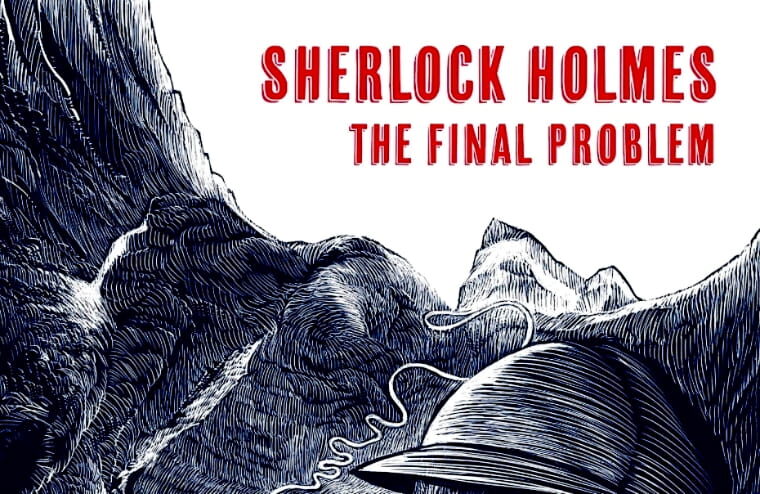
When you are very young, you are likely unaware of how other people perceive the things you enjoy. If you enjoy a work of art, you would just assume that everyone loves and appreciates that same piece to the same extent. To my child’s brain, all Sherlock Holmes stories were created equal. Each one was brilliant and exempt from criticism. Imagine how surprised I was when I read about the outrage against “The Final Problem,” a short story meant to be the great detective’s last adventure.
“The Final Problem” was supposed to live up to that name in an extreme manner. Sherlock Holmes would meet his end fighting Professor Moriarty, thus ridding the world of its most dangerous criminal mastermind. Moriarty is so ingrained in our culture that most people assume that he was a recurring adversary to Sherlock Holmes. In reality, “The Final Problem” was both the introduction to and the end of Professor Moriarty. The man Holmes describes as the “Napoleon of Crime” made only one direct appearance in any of the classic stories, though he would later be mentioned. (He did influence the events of “The Valley of Fear.”)
By the time I discovered Sherlock Holmes, Moriarty was already an established figure in pop culture by virtue of all the adaptations he’s appeared in. Moriarty is up there with The Joker and Darth Vader in the pantheon of fictional bad guys. Reading “The Final Problem” as a kid felt important because it was the first appearance of a seminal villain. Sherlock Holmes matching wits with Moriarty has weight to it after years of movies and shows depicting their conflict. But fans didn’t feel that way back in 1893.
Sir. Arthur Conan Doyle was growing tired of the Sherlock Holmes character, who was essentially seen as a superhero before comics were a thing. Holmes kept Doyle away from what he considered more important literary efforts, such as Doyle’s historical fiction. His solution was to kill his creation. “I must save my mind for better things,” he wrote to his mother, “even if it means I must bury my pocketbook with him.” With “The Final Problem,” Doyle sought to let Holmes go out on a mission that would dwarf all that came before it. Moriarty was an international gang leader involved in much of the crime Holmes combated. On top of that, he was exactly as smart and cunning as Holmes, making him Bizarro Sherlock. Basically, Moriarty represented crime itself, and defeating him was meant to be the ultimate triumph over evil. Holmes died, but he took the crime with him. And this was widely considered to be very dumb. (Though not as dumb as inventing a secret finale.)
Sherlock Holmes was the Batman of his day. Victorian nerds loved the great detective as much as modern nerds love “Star Wars.” Suffice it to say, the public didn’t take the death of Sherlock Holmes lightly. The Strand (the magazine that published the Sherlock Holmes stories) received 20,000 subscription cancellations in protest, which some say nearly killed the magazine. Conan Doyle himself received many hate letters, including one from a lady who began with “you brute.” Legend has it that Londoners wore black armbands to mourn the passing of the fictional detective. Mankind has been complaining about the series finale before the invention of television.
“The Final Problem” and the final stretch of “Stranger Things” have a few things in common. In its fourth season (the one meant to set up the fifth and final season), “Stranger Things” introduced Vecna, a previously unseen character who became the ultimate evil and was involved in all the terrible things that happened. Vecna essentially plays the Moriarty role. Taking him out is supposed to be the greatest victory of all. Now what I’m about to say will be a mighty big spoiler for those who haven’t seen the “Stranger Things” finale, so now would be the time to stop reading. For those who have seen it or are unafraid of spoilers, please continue to the next paragraph.
Like Sherlock Holmes, Eleven (the protagonist of “Stranger Things”) sacrifices herself in that same “go out with a bang” fashion. Her death is slightly ambiguous, but it is still functionally a death. At least, it is for now. Conan Doyle eventually relented and revived Sherlock Holmes. The folks behind “Stranger Things” leave Eleven’s fate just open enough in case they need to pull a Conan Doyle.
Finales are tough. Nobody wants to say goodbye to the characters and worlds they love. Even the most talented writers struggle with endings. (I’ll let you make your own jokes here.) And when a beloved series falls short of perfection at the end, you can’t help but be a little disappointed. At the same time, we probably shouldn’t send hate mail or believe in fabricated finales.
100 or so years really took the sting out of “The Final Problem.” Though I see it as a bit ridiculous now, it really is an amusing little story. Moriarty is more of a concept than a character, but he’s a heck of a concept. Evil Sherlock Holmes has an apparent appeal. Considering that “The Final Problem” always finds its way into adaptations of the Holmes myth, we can assume that public opinion shifted in its favor. Will the same happen for the final episode of “Stranger Things”? Only time will tell. In the moment, I say we all move on. There are many worse things out there than a mediocre finale.

- The Phibes Philes: Wishmaster – Movie Review - June 12, 2026
- The Phibes Philes: The Eraser – Batman’s Forgotten Foe - May 27, 2026
- The Phibes Philes: The Ghost Galleon (1974) Film Review - May 17, 2026