

Yes.
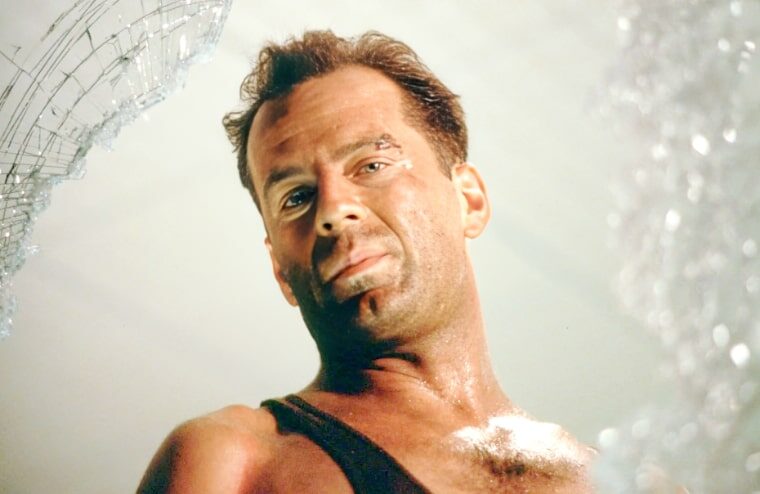
With that out of the way, I want to talk about what does and does not count as a Christmas movie. On the surface, it seems rather obvious. If a film takes place at Christmas, then it must be a Christmas movie. By that criteria, “Die Hard” most definitely makes the cut. “Is Die Hard a Christmas Movie” remains such a pervasive topic in our culture that its mere existence unequivocally cements “Die Hard” as a Christmas movie. The annual debate has become a tradition, so “Die Hard” is a Christmas movie based on that alone. Frankly, I think it’s time to bury this particular talking point. “Die Hard’s” entire plot centers on Christmas (the Nakatomi holiday party is why every character is there to begin with), and the film is filled with Yuletide iconography (decorations, Santa hats, etc.). Festive music is played (“Let it Snow” closes the film), and it’s about trying to reconcile with family (family is a very Christmas-y theme). None of the points I just made are original, and I truly believed that this debate was finally at its well-deserved end. As a society, we have accepted that “Die Hard” is a Christmas movie. And then Kevin had to resurrect it…
In a recent interview with Mythical Kitchen, “Home Alone” star Macaulay Culkin had this to say about “Die Hard”: “It’s based around Christmas, but if it were also St. Patrick’s Day, it would still work. But you couldn’t do ‘Home Alone’ on Memorial Day. It doesn’t work that way.” Now, I don’t want to dwell on Mr. Culkin’s opinion or “Die Hard” itself for much longer. (After this paragraph, “Die Hard” will be jettisoned from the conversation.) It’s enough to state that I vehemently disagree, and there is no office St. Patrick’s Day party massive enough to generate the conditions needed for “Die Hard’s” plot. That said, it did make me think about this subject beyond “Die Hard.” Many of the accepted holiday classics have a more tenuous connection to Christmas than “Die Hard.” Conversely, there are plenty of alternative Christmas flicks that haven’t achieved that mythic status in pop culture. So, what exactly is a Christmas movie?
“Christmas Vacation,” “Elf,” and all five million adaptations of “A Christmas Carol” are undeniably Christmas movies in theme, setting, and spirit. Films like that leave no room for debate. “It’s a Wonderful Life” has many sequences set outside the holiday season, yet the core of the story centers on Christmas. Even if some arguments arise, most would agree that “Wonderful Life” qualifies as a Christmas movie. But what about “Meet Me in St. Louis,” the 1944 musical film starring Judy Garland? The beloved holiday song “Have Yourself a Merry Little Christmas” originated here, and Christmas is given a prominent sequence. Turner Classic Movies always airs it about 80 times in December, revival movie theaters screen it during the season, and it’s generally accepted as a festive favorite. Heck, the movie is one I personally adore and try to watch every Christmas season.
What people seem to forget is that while the Christmas sequence is spectacular, the Halloween portion is equally great and just as important. Plus, the film also covers Spring and Summer. “Meet Me in St. Louis” covers an entire year in the lives of one family. Can we really call it a Christmas movie if every season is given a chance to shine? Some would argue that having even a single scene set during the holiday season earns a picture the title of “Christmas movie.” If that’s true, why don’t more people watch “Goodfellas” and “Rocky” during the holidays? Both of those have Christmas scenes. A pivotal moment in “The Godfather” is noticeably seasonal, though there aren’t that many “Is ‘The Godfather’ a Christmas Movie” conversations out there. (Some, to be sure. It’s just not a consistent topic of discussion every December.)
You probably think it’s because those movies are dark in tone and theme. Fair enough. But consider “Toy Story,” a warm-hearted family fantasy about the secret lives of toys. Christmas is the setting for the movie’s final moment, even though the rest takes place during Summertime. Magical toys are inherently Christmas-y; animated family features are also appropriate during this time. Before researching the subject for this piece, I had never heard anyone argue that “Toy Story” is a Christmas movie. The 1991 film “The Addams Family” opens with caroling, but no one would call it a Christmas movie. It clearly belongs to Halloween. Then what about “Tim Burton’s The Nightmare Before Christmas?” “Christmas” is in the title! Well, some people argue that it’s exclusively a Halloween movie. (Those people are wrong and deserve to be shunned.)
The debate around “Nightmare Before Christmas” offers insights into how people approach this topic. “Nightmare Before Christmas” is a movie about Jack Skellington (the King of Halloween) and his obsession with Christmas. Everything is motivated and driven by Christmas. Santa Claus himself is a major player. Despite its ghoulishness, the movie has a genuine love for both holidays, and the overall tone is merry in that Christmas special way. However, the people who argue that “Nightmare Before Christmas” is only a Halloween movie (and are very wrong) have this one simple reason: it’s creepy. That may be it in general. Maybe if a film is violent, spooky, or strays away from the jolly feeling of the season, that disqualifies it.
But wait! Do horror movies about the holiday season not count as Christmas movies? Are you really going to look me in the eye and argue that “Silent Night, Deadly Night” is not a Christmas movie? “Gremlins” looks like a Christmas card, features Christmas music, centers on gift exchange, and includes a morbid little story about Santa Claus. Surely, that must count, right? Christmas isn’t just one mood, one tone. In the Victorian era, it was common to tell ghost stories at Christmas. Any movie about a slashing Santa or murderous Christmas spirit is carrying on that tradition.
Films like “The Apartment,” “Batman Returns,” and “Blast of Silence” (a gritty 1961 noir that’s sort of like a proto-“Taxi Driver”) all cynically depict Christmas. They’re still about Christmas. “The Wizard of Oz,” “The Sound of Music,” and the Marx Brothers films receive significant attention during this period. Christmas, there is none. And yet, these are all seasonal standards. “Babes in Toyland” with Laurel and Hardy is very much associated with this time of the year. Despite an appearance by Santa and the presence of toy soldiers, there isn’t a whole lot of Noel. “White Christmas” begins and ends with Christmas, but there’s much in the middle that isn’t holly and/or jolly. Are all of these Christmas movies? Are none of them Christmas movies? Yes.
Ultimately, I think a Christmas movie is one you personally associate with the season. If a film aligns with your approach to the holidays or becomes a tradition in your household, it’s a Christmas movie. This time of the year is about love, family, and the good we are all capable of. A film that captures those themes will receive a warm welcome from me. But Christmas means different things to different people. “The Apartment” may seem more honest to some than “Miracle on 34th Street.” That’s valid. If you love the season but prefer action to carols, “Lethal Weapon” is a solid option. If you eagerly anticipate your family’s annual Christmas viewing of “Taste the Blood of Dracula,” then that is your Christmas movie. Keep Christmas in your way. There’s no wrong way to celebrate any holiday.
Except watching “Nightmare Before Christmas” at Halloween instead of Christmas. Get out of here with that.

- The Phibes Philes: Wishmaster – Movie Review - June 12, 2026
- The Phibes Philes: The Eraser – Batman’s Forgotten Foe - May 27, 2026
- The Phibes Philes: The Ghost Galleon (1974) Film Review - May 17, 2026